

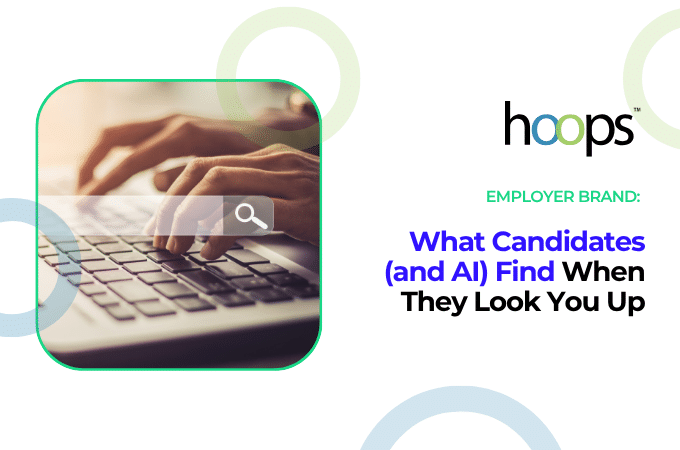
Let’s put ourselves in a candidate’s shoes for a minute. They get a message from your recruiter, or they see your job post. Before they reply or hit apply, they will often open a new tab and look you up.
So what do they find about your employer reputation?
Plenty of leaders have never checked. We’ve talked about how candidates tend to go to the bigger, better-known companies first, and about how passive candidates look you up before they answer a recruiter’s message. This post is about what they find about your employer brand, and how you can shape the picture they walk away with.
Candidates Check Before They Respond
When a lot of companies are hiring for the same people, good candidates get to be picky. That’s especially true for skilled trades talent. If your online presence is thin, out of date, or your employer star rating is low, they’ll move on to the company that looks like the safer bet. Why take the chance when there are better-marketed options?
And the worst part is that most of the time they won’t tell you something in your employer branding put them off. They just don’t reply.
Where Candidates Look
Your employer reputation isn’t only your careers page. Here’s where most people check:
- AI tools: ChatGPT, Gemini, Claude, Grok, and others. More and more people now start with AI instead of a search engine. In one 2026 survey of AI users, 37% said they begin their searches there. Candidates ask things like “What’s it like to work at [company]?” and get a summary in seconds, without ever opening your site.
- Google: Google, Safari, or Bing your company name, plus words like “jobs” and “reviews”
- Review sites: Google Reviews, Indeed, and Glassdoor (a big one)
- People they know: if a friend or family member works for you or used to, chances are the candidate will ask them what it’s really like before applying. That’s why how you treat people on their way out matters too, as we cover here.
- LinkedIn: your company page, your posts, and your employees’ profiles.
- Your careers page and job posts: and whether they match what the job is really like. This one carries less weight, since candidates tend to trust employees and outside sources more than the company itself.
- Social media: Facebook, X, TikTok, Instagram, YouTube, etc. What you post and what others post about you.
Meet Your New First Impression: AI
A May 2026 survey from PerceptionX looked at job seekers who use AI tools. Here’s what they found:
- 96% had used AI to research employers, learn about a role, or prepare for an interview, and 74% do it regularly
- 82% said AI had changed their mind about a company as a place to work
- 58% had caught AI giving them wrong information about an employer
It’s a small survey (about 300 people across seven countries) from a company that sells employer brand monitoring, so take the exact numbers with a grain of salt. Still, the direction makes sense. More people are turning to AI first, and that includes asking what it’s like to work at your company. Sometimes it gets the answer wrong (yikes!).
That’s because AI tools pull from what’s already out there. As we covered in our employer brand post, they tend to favor outside sources and employee voices over your own careers page. If your reviews are old, your profiles are out of date, or there’s not much about you online, then that’s what gets represented.
Online Reviews Shape Your Employer Reputation More Than You’d Think
BrightLocal’s 2026 Local Consumer Review Survey found that 49% of consumers trust online strangers’ views about as much as recommendations from people they know. And 97% read reviews for local businesses.
I realize that this research is about shoppers, not job seekers. But think about how you’d pick a new doctor or electrician. Start with online reviews, right? Well, candidates do the same thing with employers. In our post on the ROI of employer branding, we shared Glassdoor’s finding that 83% of job seekers research reviews and ratings before applying.
My point? A few lines from people you’ve never met can matter as much as (or more than) anything you say about yourself!
Your 30-Minute Candidate Experience Test
So what can you do about all this? Start by doing what your candidates do. Set aside 30 minutes and look yourself up. Use a non-work computer and a private browser window (incognito mode) so your own search history doesn’t shape the results.
- Ask an AI tool. Type in “What’s it like to work at [your company]?” and “Would you recommend [your company] to a [job title]?” Write down anything it gets wrong and where it seems to get its information. If it doesn’t show its sources, ask for them. Try at least two, like ChatGPT and Google’s Gemini.
- Google your company. Search your name, then your name plus “jobs” and “reviews.” Note what shows up on the first page, what’s missing, and anything that’s out of date.
- Check your ratings. Look at Google, Indeed, and Glassdoor (and Yelp if you’re B2C). Here are our pages on Google, Indeed, and Glassdoor as an example. How many reviews do you have? What’s the rating? How recent are they? Has anyone from your company responded?
- Read your reviews, especially the most critical ones. Candidates are often looking for flaws or a reason not to waste their time. What do your harshest reviews say, and are they true? Can you fix the issue, or at least respond to it? Then read your best reviews. They show what people value about working for you, so they’re a secret weapon for retention and a good guide for what to highlight in your job posts.
- Look at your own pages. Check your LinkedIn page, careers page, and a few job posts. Do they match what the culture is really like day to day?
- Ask a recent hire. What did they find when they looked you up, and did anything surprise them? Does the job match what was presented to them? If it doesn’t, that’s also a retention problem worth fixing.
Don’t be surprised if at least one of these catches you off guard. That’s normal, and it’s exactly why it’s worth doing.
What to Fix First
Once you know what’s out there, start with the quick wins for your employer reputation:
- Fix what’s out of date. Make sure your location, what you do, and your job details match on every site. Old or conflicting information is what AI tools (and candidates) pick up. If the AI test pulled something wrong, find where it got it and update that source.
- Respond to your reviews. Reply to the good ones and the bad ones, calmly and professionally. Thank people for the positive ones. For the critical ones, acknowledge the issue and, if you’ve fixed it, say so. It shows candidates someone is paying attention. (We shared more on this in our employer brand post.)
- Ask your happy employees for honest reviews. A simple, no-pressure ask after someone’s first few months works well. Don’t script it, write it for them, or offer anything in return, since most review sites don’t allow that.
- Share real employee stories. Short posts or quotes from people who work for you, on your site and on LinkedIn, help balance out what’s said elsewhere.
- Make your job posts match reality. Use what your best reviews and your recent hires told you to highlight why someone should work for you. If the job isn’t what the posting says, fix the posting (or the job).
- Check again. Run the test every few months. It takes less time once you’ve done it the first time.
Do the Search Before Candidates Do
You can’t control every word said about your company, and you can’t control what AI repeats either. But you can find out what’s out there, fix what’s wrong, and give candidates (and AI tools) better information to work with.
So block off 30 minutes this week and look yourself up. If you’d like a quick read on where you stand, our free Employer Brand Checkup is a good place to start. And if you want help with your employer reputation or with hiring for hard-to-fill roles, you’ve come to the right place!
Schedule a Free Discovery Call with Hoops
Build Your Winning Team. Hire and Scale Talent.